5 Investments Under $30 That Made Me a Better Writer
Is your book the real deal or just a hobby? Here's how to invest in your writing without breaking the bank.
I’m still thinking about the question I got at my Stanford workshop about how expensive it can be to become an author. We weren’t talking about publishing scams but about legitimate investments in your skills. Naturally, those can add up, and it’s hard to know when and where to throw down some cash.
I get being budget conscious and discerning, but oftentimes, I hear new writers resenting the idea of needing to spend money at all.
Here’s how I think about it:
If writing is just a hobby, it makes sense to spend as much or as little as you would for pure enjoyment, just as if we were talking about sewing, baking, fishing, skiing, or what have you.
If you want to be a professional writer—i.e. land a traditional book deal or sell more than a handful of your books to readers—you’ll probably need to up your game. And just like with any other profession, developing those skills takes an investment of time, money, and effort.
Hobbyist or professional? Why investing in your writing matters
I am not knocking the hobby writer. Writing just to express yourself is wonderful. I'm with you on that. Despite a 20-year career as a professional writer, 99% of what I write is more like journaling, meant to help me digest, rethink, or relive events in my life.
But here's something I think authors who aspire to traditional publishing need to understand about the business: You can’t expect a literary agent or publisher to risk their bottom line when you won't risk yours!
An agent can spend months or years working deeply on your book without making a cent unless they sell it to a publisher. Then the publisher invests tens or hundreds of thousands of dollars to bringing that book to market and needs to be confident in a decent return. If you don't think your book is worth investing in, why on earth would they?!
Of course, that doesn't mean you need to spend thousands on every course, coach, or editor who promises to make your publishing dreams come true. You need to be discerning about where your money goes.
Believe me, I know this can be a money pit, and believe me, I get that there are people peddling all kinds of miracle products at you all day every day. (Don’t even get me started on the “solutions” social media is pushing on me as I approach an age with a big fat 0 at the end. Who even knew there were three-trillion serums, devices, and methods for self-inflicted pain?! 🤪)
The good news? Some of the best investments I’ve made in my writing cost less than $30.
I recently told you about the major investments I made in my new book (coming out Dec 2027 with Thomas & Mercer!! 😁). Those coaches, classes, and editors ran in the hundreds or thousands, so today I want to tell you about the sub-$30 investments that made a real difference.
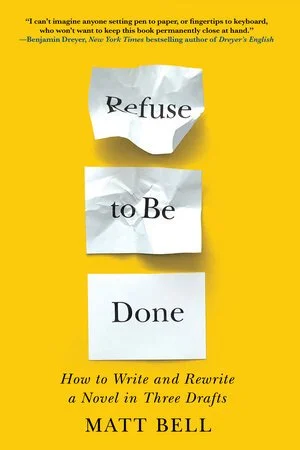
Refuse to Be Done: How to Write and Rewrite a Novel in Three Drafts by Matt Bell
For revising your novel
With honesty, humor, and whip smart advice, Bell walks you through the first “exploratory draft” (I love that term!), the rewrite, and finally the third draft where you refuse to be done and analyze everything: Every scene opening and closing, every transition, every sentence, verb, thought tag, word pairing, syllable pattern (!). If you take a quarter of his suggestions, your book will be dramatically better.
Just don’t see “three drafts” and expect three passes! The ruthless and relentless revision process took me several passes, but it helped me polish my prose and ultimately cut 15,000 words I initially thought were essential. My book is so much tighter.
Try this one: Find your weakest sentences. “For your next pass, read your novel paragraph by paragraph, and in every single paragraph, highlight the weakest sentence. This will take some time, and it may not feel great, but I promise it’s worth it! Once back on the computer, do two things: First delete all these weakest sentences. Second, consider if what remains of the paragraph is strong enough to stand the deletion. Most often it will be, because the weak stuff—especially the kind of weak sentences you’ve already rewritten a dozen times but never got right—eventually forces the surrounding sentences to make up for its lack. Wherever you feel something is awry in your post-deletion prose, write a new sentences into the deleted one’s place instead of continuing to tinker with the broken one.”
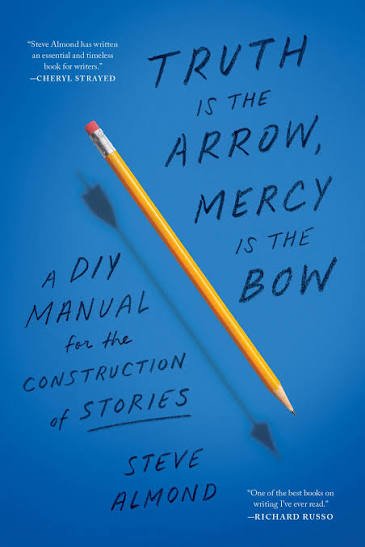
Truth Is the Arrow, Mercy Is the Bow by Steve Almond
For mastering craft and surviving the writing life
This must be the most entertaining book ever written on craft. Dare I say it rivals or tops Anne Lamott’s Bird by Bird. Almond will keep you laughing—and thinking deeply—as you learn about everything from plot to character to the writing life. He spoke at my MFA program years ago and told us that he is a writer not because he’s talented but because he never gave up. Well, that’s BS. He’s insanely talented, but I still love the point he makes in the book’s final chapter. I first heard this metaphor in college, but Almond tells it best:
“You can’t win if you don’t buy a ticket. Back in grad school, I published a few stories in literary journals, and made sure everyone knew. What I never confessed was that I’d received a hundred rejections for every acceptance. The only other person in our program who knew this was the poet and essayist Camille Dungy, who house-sat for me one summer and received my mail. Camille has told this story for years. The reason I got my work published wasn’t because I was a better writer than my comrades. It was because I bought more tickets.”
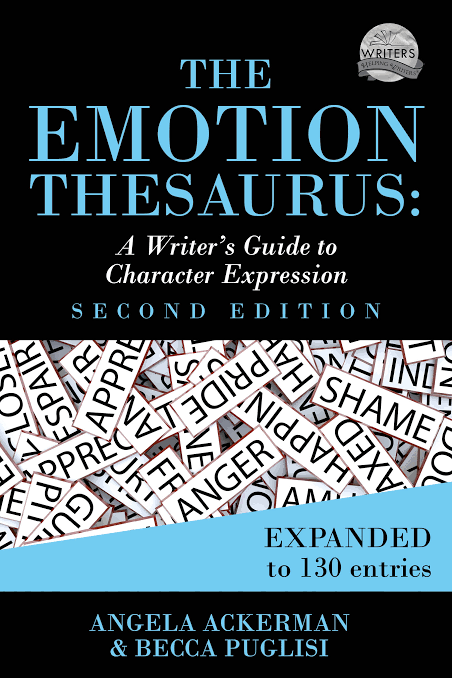
The Emotion Thesaurus by Angela Ackerman and Becca Puglisi
For bringing characters' emotions to life
A practical reference for showing not telling characters’ emotions. Their free website is a start, but the added options in the book are well worth having on hand.
You’ll find 75 emotions or internal states and a list of options for demonstrating them: physical signals that can be observed, internal sensations the character would experience, mental responses. Instead of saying your character disgusted, you’ll find 50 ways to show it, from curling her lip, to wrinkling her nose, feeling nauseous or having the urge to flee.
Writing my thriller meant continually looking up new ways to show someone’s fear! You can only make their heart race so many times.
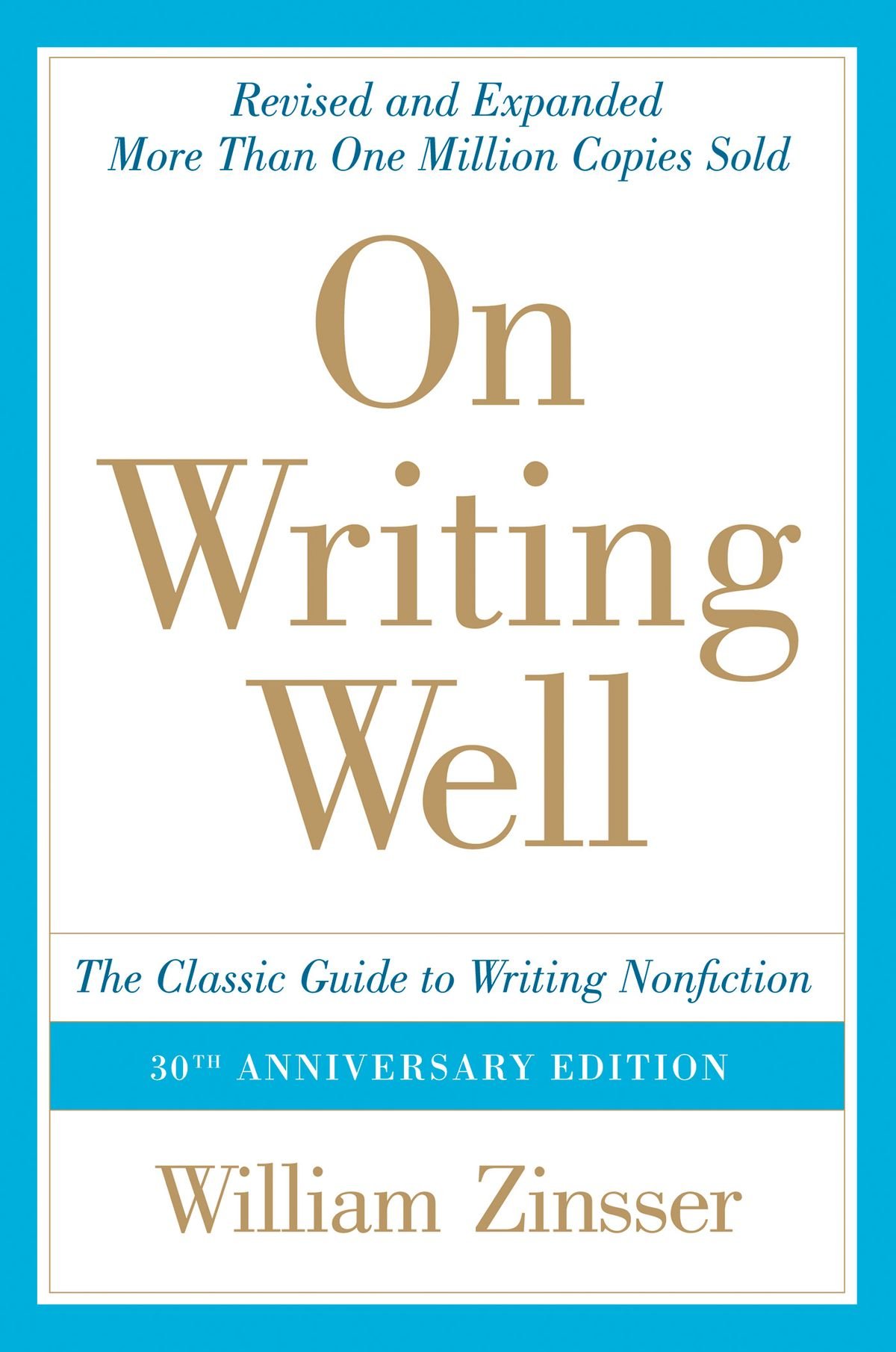
On Writing Well by William Zinsser
For sharpening your voice
I don’t know if you’ll love this one today, but it’s a classic that helped transform my writing before I even believed becoming a writer was something people could do. I’d always been a voracious reader and a journaler, but actually writing? For a living? It hadn’t occurred to me. I didn’t realize I had talent, and in a million years I’d didn’t imagine real, non-famous or connected people could actually make a career of it.
Then at 16, I was browsing the used bookstore while my mom looked for the latest John Grisham, and a battered copy of this book caught my eye. I brought it home, devoured it, and wrote an essay on Madame Bovary that was due the next day for my 11th-grade English class. I wrote a counterintuitive lede (that Charles was the asshole, not Emma), and defended my argument with evidence. I read my sentences aloud to hear the rhythm and the difference between strong words and weak ones, and then cut all the clutter I could. I stopped trying to sound smart or academic and wrote more like I spoke.
Well, Mrs. Glass was so excited that she pinned my essay to the bulletin board for everyone else to read—something I’d never seen her do before. That’s when I thought, huh, maybe I have something here. That glimmer lodged itself in my brain and I flirted with writing for years, eventually diving in full time after being laid off from my airline job in my mid-twenties.
It’s still a valuable read today, and its tenets are something I could stand to relearn, but its outdated references are also hilariously dated, especially the warning about anxiety writers experience when trying out a word processor for the first time. 😆 The conversation around ditching the typewriter was almost as fraught as today’s conversations on AI.
Looking back, I think this book changed my life as much as it changed my writing. Yes, it introduced me to craft techniques my school wasn’t teaching, but more importantly, it inspired me to try something new just for the heck of it, put my work out into the world, and discover that maybe I had something worth saying.
That little hint of possibility was enough to make me want to keep going. And that brings me to my final recommendation. Not a book this time, but something that might inspire your writing a whole lot more.
CREDIT: Kunal Lakhotia
Say yes
For experiencing things worth writing about
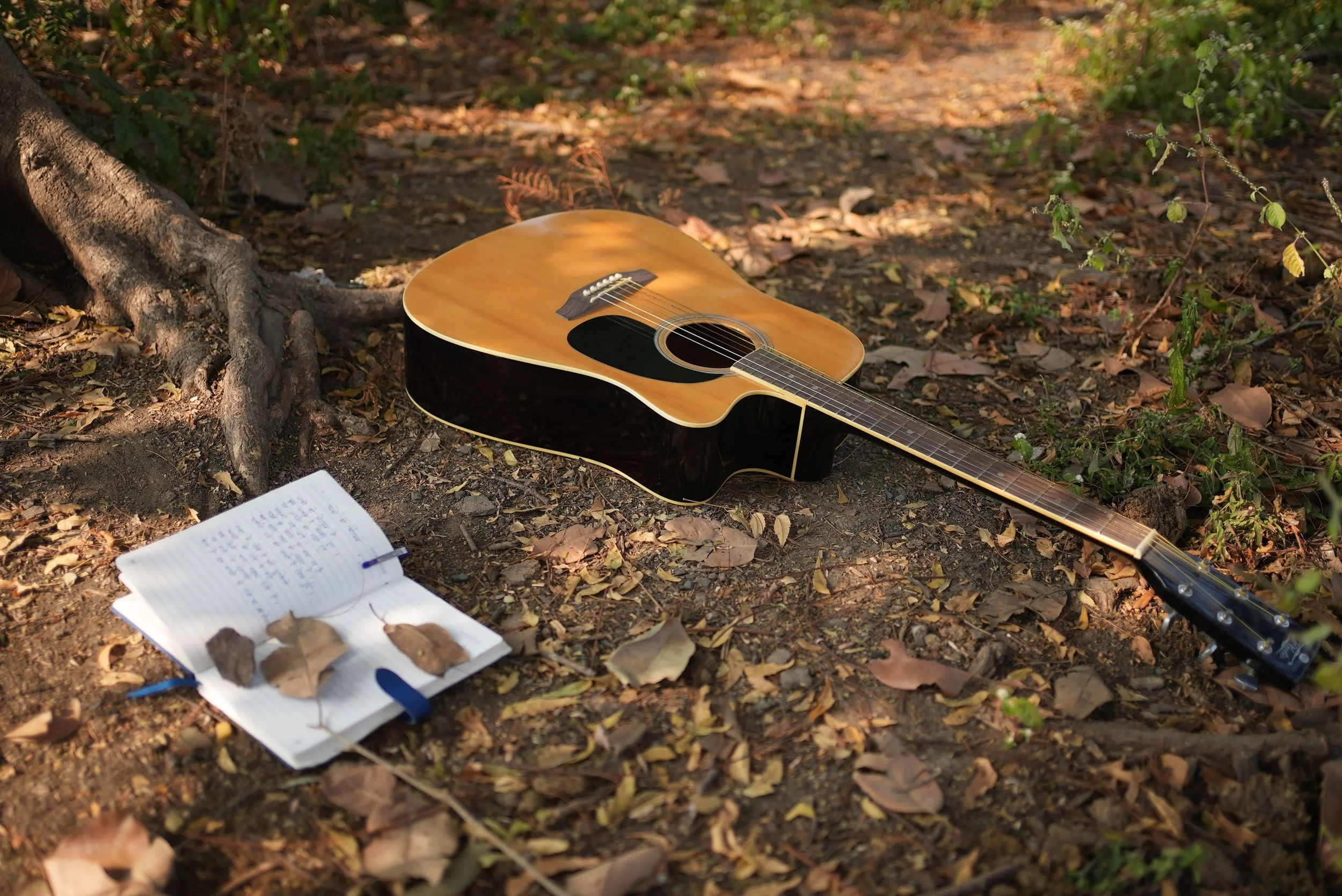
To opportunities, adventures, and even the occasional ill-advised romance. Like how I recently said yes to dating a soulful, dark, and tortured musician who my friends knew as Hot School Dad. We spent hours talking about music and books, and encouraging either other to create. He helped me brainstorm some of the revisions to my novel, and he even inspired a few added details to my fictional love interest.
But the real gift was reconnecting with an entire spectrum of emotions I hadn't felt in nearly 20 years of predictable married life. Desire, uncertainty, excitement, heartbreak—and ultimately, the kind of confidence you can only gain from walking away from something you desperately want because you know it isn't good for you.
And now he's released the better part of an album, some of which may or may not have been inspired by our breakup. (Apparently, the mixed messages don't end when the relationship does. 😂) Regardless, I think it’s safe to say the connection was good for both our creative lives.
In short, you must invest in your writing, but money isn’t everything.
From my earliest and most embarrassing pieces and pitches, to my MFA, to my published novels, I’ve expended a lot of time, money, and plenty of tears. Most of those investments have been worth it. But I’ve also been utterly transformed by a battered book at a used bookstore, wins and rejections along the way, and the many adventures and heartaches that have not only given me something to write about but helped me tap into the full spectrum of human emotion.
The point is to keep investing in yourself. Whether it costs you nothing, a few bucks, your dignity, or a broken heart, it's ALL material! (Also say no! Especially to things that drain your time, energy, or life force, be it a work obligation or emotionally unavailable partner!)